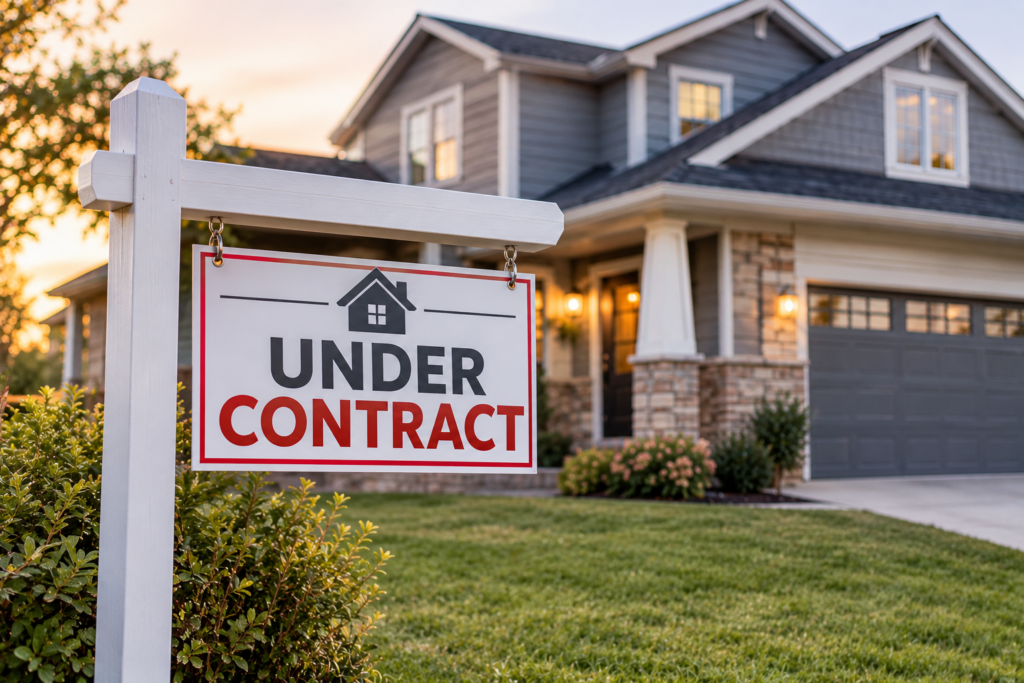
If you’ve spent time browsing real estate listings, you’ve probably come across properties marked as “under contract.” For buyers who are actively searching for a home, seeing this status on a property they love can be disappointing. For sellers, having a home under contract represents an important step toward completing the sale. However, the term doesn’t necessarily mean the property has officially sold or that the transaction is guaranteed to close.
Understanding what it means when a house is under contract can help buyers and sellers navigate the real estate process with greater confidence. Whether you’re searching for your next home in Minnesota or preparing to sell your current property, knowing how real estate contracts work can help you make informed decisions and understand what happens between accepting an offer and closing.
What Does Under Contract Mean in Real Estate?
When a house is under contract, it means the seller has accepted an offer from a buyer, and both parties have entered into a legally binding purchase agreement. This agreement outlines the terms of the transaction, including the purchase price, financing arrangements, contingencies, and anticipated closing date.
Although the seller has accepted an offer, the transaction is not yet complete. Several important steps typically need to happen before ownership officially transfers to the buyer. These may include completing a home inspection, obtaining mortgage approval, conducting an appraisal, and resolving any outstanding issues identified during the process.
The length of time a home remains under contract can vary depending on the financing arrangements, contract terms, and circumstances of the transaction. Some sales move quickly, while others require additional time to complete inspections, documentation, or negotiations.
For buyers and sellers, understanding that an accepted offer is not the same as a completed sale is essential. Until the transaction closes, certain circumstances may still prevent the purchase from moving forward.
What Happens After a House Goes Under Contract?
Once a seller accepts an offer, the home enters an important phase of the real estate transaction. During this period, both parties work toward satisfying the conditions outlined in the purchase agreement.
One of the first steps may involve the buyer submitting earnest money, which is a deposit demonstrating their commitment to purchasing the property. Earnest money is typically held according to the purchase agreement and may be applied toward the buyer’s closing costs or down payment when the transaction is completed.
If the purchase agreement includes an inspection contingency, the buyer generally has an opportunity to arrange a professional home inspection within the agreed-upon timeframe. The inspection can help identify concerns involving the home’s structure, major systems, or overall condition. Depending on the contract terms and findings, the buyer may request repairs, negotiate changes, proceed with the purchase, or exercise an applicable cancellation right.
Buyers using mortgage financing must also work with their lender to complete the loan approval process. This often involves verifying financial information, reviewing documentation, and obtaining an appraisal. Meanwhile, title-related work and other closing preparations are completed to help ensure the property can be transferred according to the agreement.
Is Under Contract the Same as Pending?
Although the terms “under contract” and “pending” are sometimes used interchangeably, they can represent different stages of a real estate transaction depending on the listing system and local practices.
A property listed as under contract generally indicates that an offer has been accepted, but certain conditions may still need to be satisfied. These conditions could include inspections, financing approval, or other contingencies outlined in the purchase agreement.
A pending status often indicates that the transaction has progressed further and is moving toward closing. In some cases, major contingencies have already been satisfied or removed, although outstanding steps may remain.
It’s important to understand that listing status terminology can vary between real estate platforms and multiple listing services. A property labeled pending on one website may appear differently elsewhere, and the exact meaning of a status may depend on local MLS rules.
For Minnesota homebuyers, working with a local real estate agent can help clarify the current status of a property and whether there may still be an opportunity to submit an offer.
Can You Still Make an Offer on a House That’s Under Contract?
One of the most common questions buyers ask is whether they can still make an offer on a property that is already under contract. In some situations, the answer is yes, although the seller’s ability to consider or accept another offer depends on the existing purchase agreement and applicable rules.
Some sellers may be willing to consider backup offers while their property is under contract. A backup offer allows another interested buyer to establish an agreement that may become effective if the original transaction falls through, subject to its terms.
For example, if the first buyer is unable to secure financing or properly cancels the agreement under an applicable contingency, the seller may have an opportunity to proceed with a backup buyer. However, the seller generally cannot disregard an existing binding agreement simply because another buyer offers a higher price.
Submitting a backup offer can be worthwhile if you are particularly interested in a property, but there is no guarantee that the home will become available. Buyers should carefully review the terms of any backup agreement and understand how it may affect their ability to pursue other properties.
Why Do Homes Fall Out of Contract?
Although many real estate transactions successfully reach closing, some agreements are canceled before the sale is completed. Understanding the common reasons can help buyers and sellers prepare for potential complications.
Financing problems are one possible reason a transaction may not move forward. A buyer might receive mortgage preapproval but encounter difficulties during final underwriting because of changes in employment, debt obligations, documentation, or other financial circumstances.
Home inspection findings can also create challenges. If an inspection reveals significant structural concerns, water damage, outdated electrical systems, or other expensive issues, the buyer and seller may need to negotiate how those concerns will be addressed. Depending on the agreement, unresolved inspection concerns may lead to cancellation.
Appraisal issues can create additional complications. If a home appraises for less than the agreed-upon purchase price, the lender may base financing on the lower appraised value. The buyer and seller may need to renegotiate the price, the buyer may need to provide additional funds, or the transaction may not proceed.
Other issues, including title concerns, missed contractual deadlines, or unexpected circumstances, can also affect a transaction. Whether either party can cancel without contractual consequences depends on the specific agreement and applicable law.
What Are Contingencies in a Real Estate Contract?
Contingencies are conditions included in a purchase agreement that can affect whether a real estate transaction moves forward. They help establish expectations and may provide specific rights or protections when certain requirements are not satisfied.
A home inspection contingency may allow the buyer to evaluate the property’s condition before proceeding. A financing contingency may protect the buyer if they are unable to obtain the required mortgage under the terms of the agreement. An appraisal contingency, when included, may address situations where the property’s appraised value is below the purchase price.
Some purchase agreements also contain a home sale contingency, which makes the buyer’s purchase dependent on selling another property. This can introduce additional uncertainty because the transaction may depend on the successful completion of a separate sale.
Contingencies are not automatic, and their protections depend on the specific wording of the contract. Buyers and sellers should understand which contingencies are included, the deadlines associated with them, and what happens if a condition is not satisfied.
Working with an experienced real estate professional can help both parties navigate these provisions and avoid misunderstandings during the transaction.
How Long Does a House Stay Under Contract?
The amount of time a house remains under contract depends on several factors, including the type of financing, agreed-upon closing date, inspection arrangements, and any complications that arise.
Many financed residential transactions take approximately 30 to 60 days from an accepted offer to closing, although some take less time and others take considerably longer. Cash purchases may move more quickly because they do not require traditional mortgage underwriting, but title work, inspections, and other contractual requirements may still affect the timeline.
Delays can occur when lenders request additional documentation, repairs need to be completed, or title issues require resolution. Buyers and sellers may also agree to extend the closing date when circumstances make the original timeline difficult to meet.
For sellers, staying organized and responding promptly to requests can help keep the transaction moving. Buyers can support a smoother process by maintaining communication with their lender, submitting documents on time, and avoiding financial changes that could interfere with mortgage approval.
What Should Buyers Do When Their Favorite House Is Under Contract?
Finding out that a property you love is already under contract can be frustrating, especially if it appears to meet all your needs. However, there are still productive steps you can take while continuing your home search.
First, ask your real estate agent to confirm the property’s current status and whether the seller is considering backup offers. Online listing information may not always reflect the latest developments, so obtaining updated information can help you understand your options.
If a backup offer is possible, discuss whether submitting one makes sense for your situation. Consider the terms carefully, including how long you may be committed to the agreement and what happens if the original transaction closes successfully.
It’s also important to continue exploring other properties rather than relying entirely on the possibility that a particular sale will fall through. New listings may become available, and comparable homes may offer features or opportunities you hadn’t previously considered.
Remaining flexible and prepared can help you respond quickly when another suitable property becomes available.
What Does Being Under Contract Mean for Sellers?
For homeowners selling their property, reaching the under-contract stage is an exciting milestone. It means a buyer has agreed to purchase the home under specific terms, bringing the seller closer to completing the transaction.
However, sellers should understand that their responsibilities don’t end when the offer is accepted. They may need to provide access for inspections, respond to repair requests, complete agreed-upon work, and cooperate with appraisal or closing-related requirements.
Sellers should also be mindful of maintaining the property’s condition until closing. Significant changes or damage occurring after the agreement is signed could create complications, depending on the circumstances and contract terms.
Keeping communication open with your real estate agent is especially important during this period. Your agent can help coordinate deadlines, communicate with the buyer’s representatives, and address issues that arise before closing.
Even though the home is under contract, sellers should avoid assuming the sale is final until the closing process has been successfully completed.
Can a Seller Accept a Better Offer After Going Under Contract?
Once a seller has entered into a binding purchase agreement, they generally cannot simply cancel the transaction to accept a higher offer from another buyer. The existing agreement establishes legal obligations that both parties must follow.
If another buyer expresses interest in the property, the seller may be able to consider a backup offer, depending on the contract terms and circumstances. However, a backup agreement does not automatically eliminate the seller’s obligations to the original buyer.
Attempting to withdraw from a valid purchase agreement without an applicable contractual or legal basis could expose a seller to legal consequences.
For this reason, sellers should carefully evaluate offers before accepting them. Purchase price is important, but financing strength, contingencies, closing timelines, and other terms can also influence the likelihood of a successful transaction.
A knowledgeable real estate agent can help sellers compare offers and understand the practical implications of different contract terms before making a decision.
When Is a House Officially Sold?
A house is not officially sold simply because the seller accepts an offer or the listing status changes to under contract. The transaction must proceed through the required closing steps before ownership is transferred.
At closing, the buyer and seller complete the necessary documents, funds are transferred according to the settlement arrangements, and the deed is delivered and handled for recording as required. The exact procedures depend on the transaction and local practices.
Once the required closing conditions are satisfied and ownership transfers, the sale is complete. The listing can then be updated to reflect its sold status.
For buyers, closing marks the transition from prospective purchaser to homeowner. For sellers, it represents the successful completion of the sale and the transfer of their ownership interest.
Understanding the distinction between under contract and sold can help both parties maintain realistic expectations throughout the process.
Why Working With a Real Estate Agent Matters
Real estate transactions involve multiple deadlines, financial considerations, and contractual obligations. Having professional guidance can make these steps easier to understand and manage.
For buyers, a real estate agent can help explain listing statuses, identify available properties, arrange showings, and prepare competitive offers. If a desired property is under contract, an agent can also help determine whether a backup offer is an option.
For sellers, an agent can assist with reviewing offers, coordinating communication, monitoring important deadlines, and helping navigate challenges that arise before closing.
Local market knowledge is particularly valuable because real estate practices and market conditions can vary between communities. Understanding how transactions typically progress in Minnesota can help buyers and sellers prepare for each stage.
Working with a knowledgeable professional provides guidance throughout the process, from the initial offer to the final closing.
Navigate the Minnesota Real Estate Market With Kontor Realty Group
Understanding what it means when a house is under contract is an important part of buying or selling real estate. While an accepted offer represents significant progress, the transaction isn’t complete until the necessary requirements have been satisfied and the sale has officially closed.
For buyers, an under-contract listing doesn’t always mean every opportunity has disappeared. Backup offers may be possible, and additional properties may become available. For sellers, the under-contract period is a time to remain organized, communicate effectively, and work toward a successful closing.
At Kontor Realty Group, we understand that navigating the real estate market can involve important decisions and unexpected questions. Our team is committed to helping Minnesota buyers and sellers understand the process, evaluate their options, and move forward with confidence.
Whether you’re searching for a home, preparing to sell, or navigating an accepted offer, having the right guidance can make a meaningful difference.
Ready to take the next step in your real estate journey? Visit Kontor Realty Group to connect with our team and learn how we can help you navigate the Minnesota real estate market.